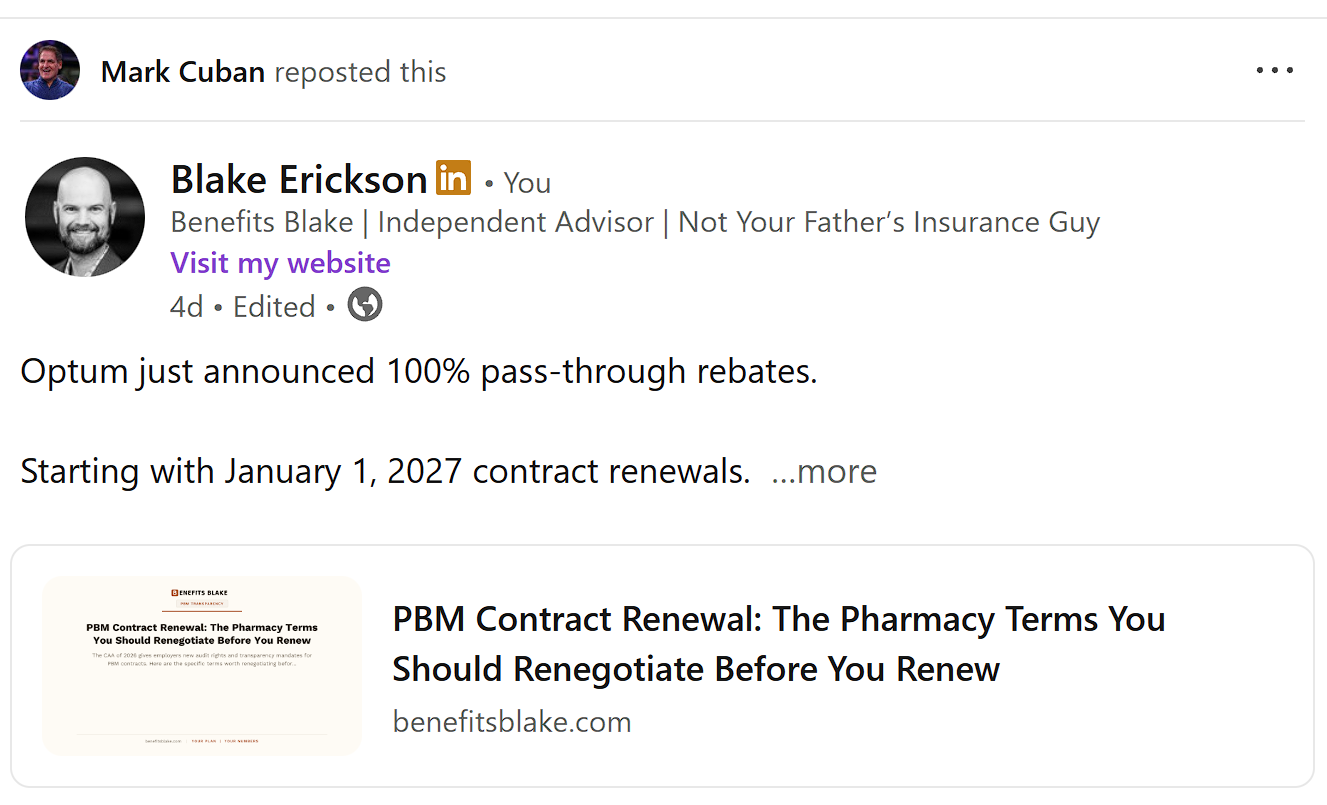
Your PBM Contract Is Working Against You
Most employers sign PBM contracts and forget them. The PBM counts on that. Every term you don't push back on is money leaving your plan.
Open enrollment deadlines crowd out everything else. Pharmacy contract renewals get rubber-stamped. And then you spend the next 12 months wondering why drug spend keeps climbing.
The federal landscape just changed in your favor. Now's the time to use it.
What the CAA of 2026 Actually Gives You
The Wiley Law analysis of the Consolidated Appropriations Act of 2026, enacted February 3, 2026, is direct. The law amends ERISA, the Public Health Service Act, and the Internal Revenue Code. It mandates drug pricing transparency, increased reporting, and 100% rebate pass-through for PBM contracts. That's not a proposal. It's law. But it lands in two waves, and most summaries get the timing wrong.
According to U.S. Pharmacist, the CAA of 2026 imposes 100% rebate pass-through and compensation disclosure on commercial PBM contracts. The two don't arrive together. Compensation disclosure took effect on enactment, so it already covers any contract you enter, extend, or renew. Rebate pass-through attaches to plan years beginning 30 months after February 3, 2026. That's January 1, 2029 for a calendar-year plan. So pass-through isn't something you cite at this renewal. It's something you negotiate for.
Here's the catch. PBMs will likely try to offset lost rebate revenue by increasing administrative fees or packaging new "value-added services." Those fees must now be disclosed and justified as reasonable under ERISA and bona fide service fee standards. Watch for that move.
The Specific Terms Worth Fighting For
Key PBM Contract Terms: What to Lock In at Renewal
| Contract Term | Risk If Vague | What to Demand |
|---|
| Generic Pricing | No floor guarantee | Hard % off MAC/NADAC |
| Brand Discounts | Rebate spread kept by PBM | 100% pass-through + WAC % |
| Specialty Definition | PBM expands list silently | Named list, written notice |
| Audit Rights | PBM self-review only | Independent auditor access |
| Fee Disclosure | Hidden admin markups | Full itemized disclosure |
Generic pricing guarantees. Your contract should lock in a defined discount off MAC (maximum allowable cost) or NADAC benchmarks. Vague language like "competitive pricing" protects no one but the PBM. Push for hard percentage floors with reconciliation language if claims miss the guarantee.
Brand discount rates. Rebate pass-through is now a federal mandate for applicable contracts. But rebate pass-through alone isn't enough if your discount off WAC (wholesale acquisition cost) is weak. Get both locked in. If the PBM resists showing you the spread between what they negotiate and what you receive, that tells you something.
Specialty drug definitions. This is where plans bleed. PBMs define "specialty" broadly, and specialty drugs carry higher cost-sharing and margin for the PBM. Your contract should define specialty by specific drug lists. Tie the definition to a named list and require written notice before any drug is reclassified.
Audit rights. Here's where most summaries get it wrong. The CAA of 2026 doesn't give you an audit right. The broad one sits in the DOL's proposed 408(b)(2) rule, and proposed isn't law. So if you want to audit, your contract has to carry it. Negotiate for independent auditor access, not just the PBM's internal review process. An OIG audit of NALC Health Benefit Plan's pharmacy operations administered by CVS Caremark recommended the carrier adopt new controls to ensure the PBM charges no greater than the value of negotiated pricing. That finding is a template for what your audit scope should cover.
Compensation and fee disclosure. Per Lockton, PBM contract terms may not restrict or delay disclosure of compensation, fees, or information tied to manufacturer and pharmacy payments under the CAA of 2026. If your current contract has gag clauses or broad confidentiality language around fees, those provisions are now legally suspect. Flag them. Remove them.
The Fee Structure Is About to Shift Under You
KFF reports that the CAA of 2026 mandates delinking PBM compensation from drug prices and negotiated rebates for Medicare Part D plans. It replaces that model with a flat "bona fide service fee" reflecting fair market value, beginning January 1, 2028. The commercial market will follow pressure from that structural shift.
PBMs are already planning for it. You should be too. Administrative fees may rise. New service bundles may appear. Each one needs justification and a benchmark. Not just a line item on an invoice.
The Federal Register guidance from DOL notes that contracts may allow for interim "market checks," a comparison of aggregate program pricing terms with market pricing across distribution channels and admin fees. Build that language into your contract now. If the market moves and your terms don't, you need a mechanism to act. This clause gives you one.
The math is there. You just need someone to show you.
Subscribe and grab the PBM Renegotiation Checklist, free. Plus bi-weekly analysis across five pillars, written for the people who own the budget.
Every other Wednesday. Unsubscribe anytime. We may show your company’s logo on our homepage. Privacy